
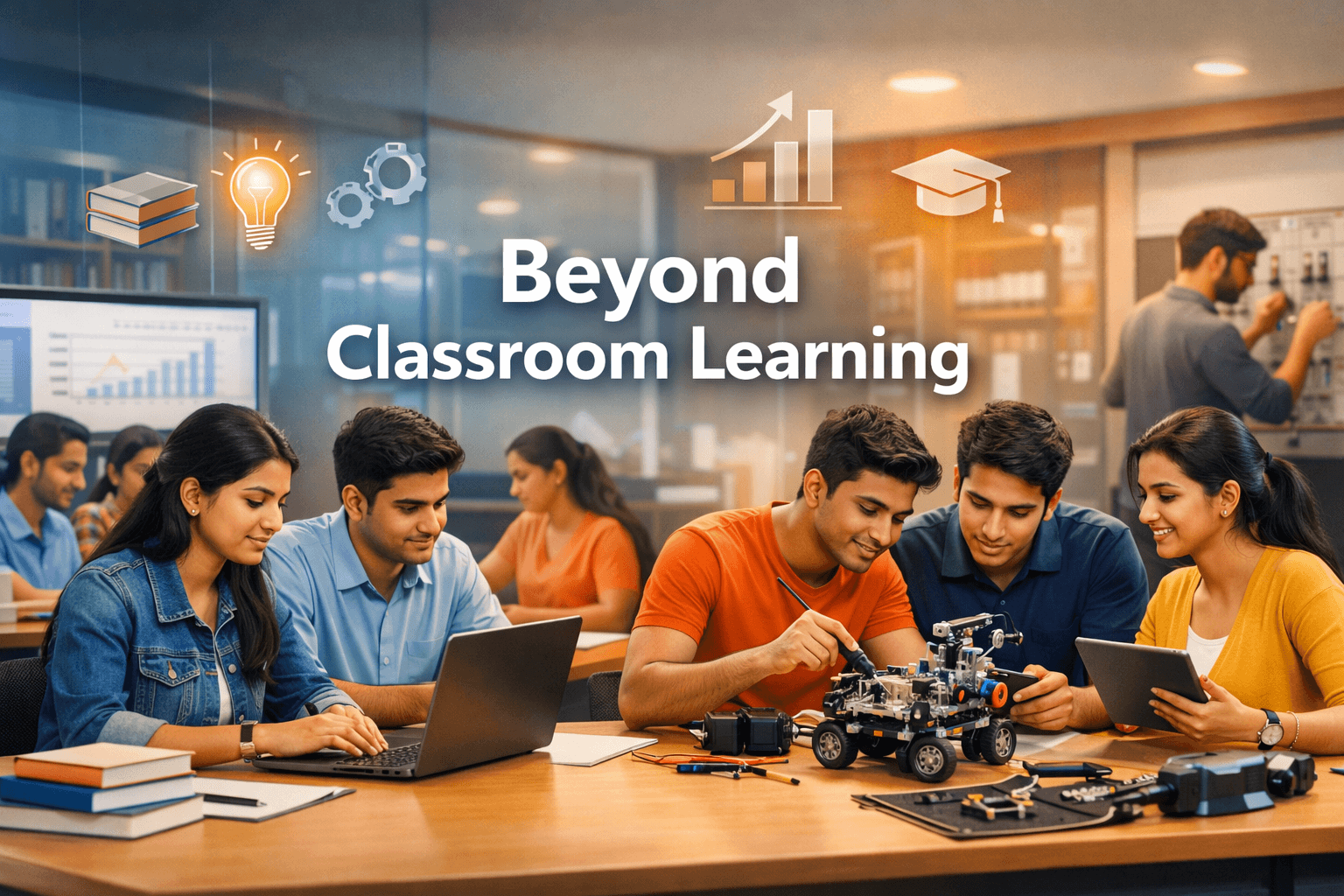
Skill development for youth has become one of the most important conversations in today’s world. As opportunities grow and industries evolve, the expectations from young individuals are no longer limited to academic knowledge alone.
Education plays a crucial role in shaping thinking, discipline, and foundational understanding. Classrooms provide direction, structure, and exposure to essential subjects that build intellectual capacity. However, in a rapidly changing environment, learning must extend beyond textbooks to prepare youth for real-life challenges.
The goal is not to replace education — but to strengthen it with practical experience and skill development.
Education Builds Foundation, Skills Build Capability
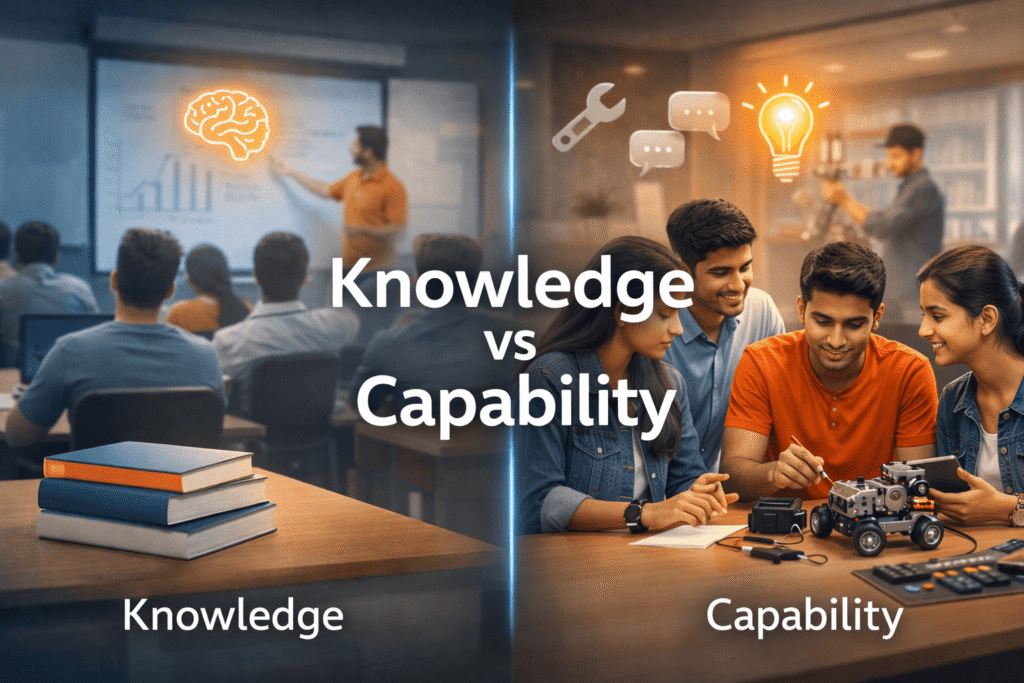
The education system is designed to provide knowledge, and it does that effectively. Subjects, theories, and structured learning help students develop analytical thinking and awareness.
But real-world situations demand more than knowledge. They require:
- Communication
- Decision-making
- Leadership
- Adaptability
- Problem-solving
These are not always developed inside a classroom.
Skill development for youth bridges this gap. It transforms knowledge into action and confidence into capability.
The Growing Gap Between Learning and Application
Many students complete their education with strong academic understanding but still feel uncertain when it comes to applying that knowledge.
This is not a failure of the system — it is a natural gap that exists between theory and real-world experience.
For example:
- Knowing concepts is different from presenting ideas confidently
- Understanding leadership is different from leading a team
- Learning about problems is different from solving them
This is where exposure, participation, and experience become essential.
Why Skill Development for Youth Matters Today
In today’s world, opportunities are not limited — but competition is increasing. What differentiates individuals is not just what they know, but what they can do with what they know.
Skill development for youth helps in:
- Building confidence through real experiences
- Improving communication and interpersonal skills
- Enhancing decision-making ability
- Preparing for professional and social environments
It creates individuals who are not just qualified, but capable.
Access to Skills Is Easier Than Ever

One of the biggest advantages today’s youth have is access to learning platforms beyond traditional classrooms. Skill development for youth is no longer limited by location or expensive institutions.
Today, platforms like Udemy, Coursera, LinkedIn Learning, and HubSpot Academy offer a wide range of courses — from communication and leadership to technical skills like digital marketing, data analysis, and business fundamentals.
Many of these courses are affordable, and some are even available free of cost. What matters is not the lack of opportunity, but the willingness to take initiative.
Skill development for youth today is not restricted — it is accessible to anyone ready to learn, explore, and grow beyond the basics.
Learning Beyond the Classroom
Real growth often happens outside traditional academic environments.
Platforms that provide:
- Competitions
- Events
- Workshops
- Public speaking opportunities
- Team-based activities
allow youth to test themselves, make mistakes, learn, and grow.
These experiences help students understand:
- Their strengths
- Their limitations
- Their interests
This clarity is something that cannot be taught — it must be experienced.
The Role of Exposure and Participation

Participation is one of the most powerful forms of learning. And understanding the importance of youth participation helps individuals grow beyond theoretical knowledge.
When students step forward to:
- Present
- Compete
- Collaborate
- Lead
They begin to understand real-world dynamics.
Skill development for youth is not about perfection — it is about progress through participation.
Every experience adds a layer of understanding that shapes future decisions.
A Balanced Approach to Growth
It is important to understand that education and skill development are not opposites.
They are complementary.
- Education provides direction
- Skills provide execution
- Experience provides clarity
When these three come together, they create individuals who are prepared not just for careers, but for life by developing independent thinking and life skills.
The Way Forward
As the world continues to evolve, the definition of learning must also expand.
Students should not limit themselves to classrooms alone. At the same time, institutions and platforms must create more opportunities where youth can engage, explore, and grow.
Skill development for youth is not a separate path — it is an extension of education itself.
Conclusion
Every student begins their journey with knowledge. But over time, what truly shapes their future is how they use that knowledge.
Skill development for youth is about stepping forward, trying, learning, and growing beyond comfort zones.
Because in the end, success is not defined only by what we have studied —
but by what we are capable of doing with it.
Let’s Connect with YuvaRise on Social Media.
Pingback: Importance of Creativity in Students in the Era of AI
Pingback: Competitive Exam Pressure in India: A Silent Youth Crisis