
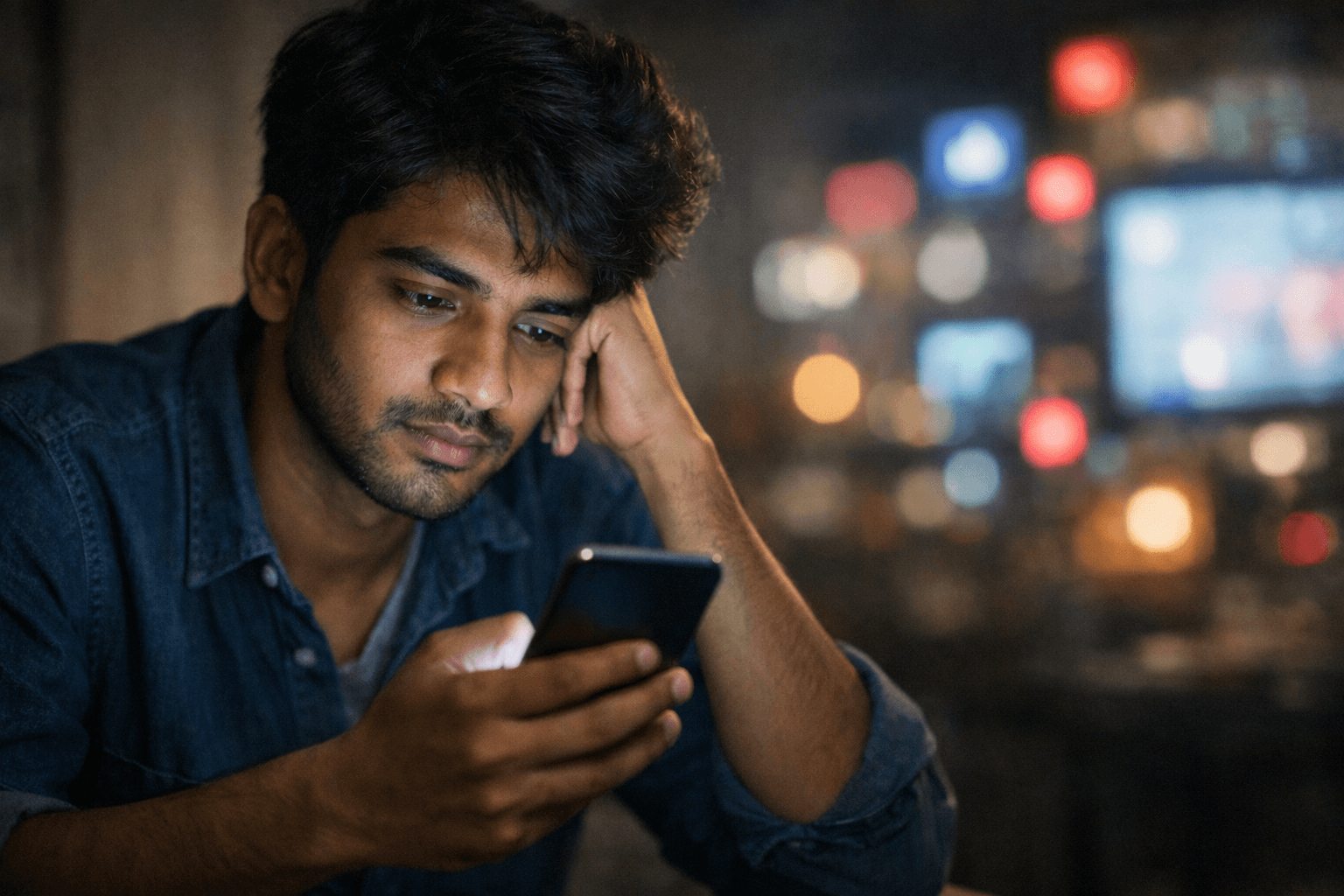
We are all born with a mind of our own. A mind capable of thinking, questioning, understanding, and choosing. Yet, somewhere along the way, many of us stop using it.
Not because we are incapable —
but because it is easier to follow than to think.
In today’s world, misinformation on social media has quietly become part of daily life. It influences what we believe, what we oppose, what we fear, and even whom we hate. Often, this happens without us realising it.
This blog is not about blaming anyone. It is about understanding what is happening — calmly, honestly, and responsibly.
The Habit of Walking on Someone Else’s Path
From childhood, we unconsciously learn to walk on paths already laid by others.
What our parents admire, we begin to admire.
What they dislike, we start rejecting.
What our surroundings repeat, we accept as truth.
This influence is not always wrong. Much of it comes from love, care, and protection. But the problem begins when influence replaces independent thinking.
Over time, opinions stop being formed — they are inherited. Beliefs stop being questioned — they are obeyed. And today, social media has become the fastest teacher of this habit.
When Questioning Stops, Obedience Begins
Thinking independently is not comfortable. It requires effort, silence, and sometimes standing alone.
Blind following, on the other hand, feels safe. It gives a sense of belonging. Agreeing with the crowd feels easier than questioning it.
This is why misinformation on social media spreads so easily. Not because people are foolish — but because they are busy, emotional, and constantly distracted.
When questioning stops, opinions turn into commands. And obedience begins without force.
Misinformation on Social Media: A Silent Daily Influence
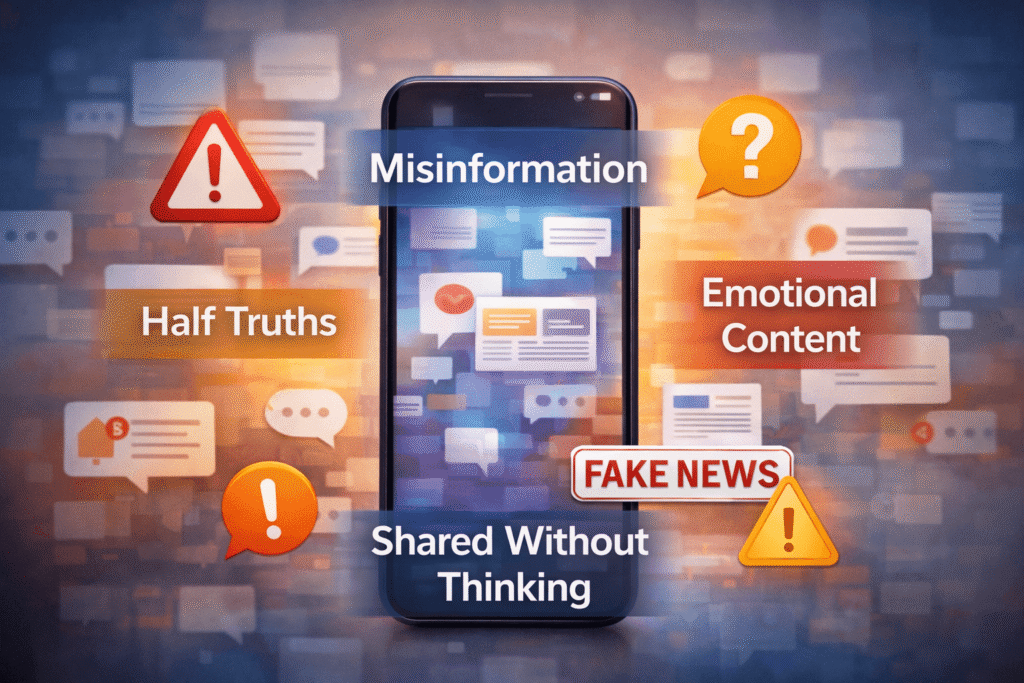
Most misinformation does not look dangerous at first. It often comes disguised as:
- Short videos
- Emotional posts
- Strong opinions
- Selective facts
People don’t verify because the content feels convincing. They don’t pause because everyone else is sharing it. Slowly, truth, opinion, and manipulation start blending into one. And when this happens daily, thinking becomes reactive instead of reflective.
This is how misinformation on social media quietly reshapes thinking — one scroll at a time.
Half Knowledge: The Most Dangerous State of Mind
Not knowing something is not dangerous. It keeps humility alive.
But half knowledge creates confidence without understanding.
Many young people today:
- Know headlines but not context
- Know conclusions but not reasons
- Know opinions but not facts
This creates strong reactions based on weak foundations.
Half knowledge does not ask questions. It argues.
And misinformation feeds exactly on this stage of thinking.
Politics, Power, and the Advantage of Blind Following
Political content on social media is rarely complete. Complex issues are reduced into simple emotions.
Right vs wrong.
Us vs them.
Enemy vs saviour.
This simplification is powerful because it removes the need to think. And when people stop thinking, power becomes easy to control.
Political leaders and groups benefit when people:
- React emotionally
- Share without verification
- Follow narratives without understanding
This is not about one ideology or party. It is about a system that benefits from blind following.
How Communities and Religions Get Pulled Into Conflict
Misinformation does not only influence opinions — it fuels division. Edited clips, incomplete stories, and false narratives slowly create fear. Fear turns into anger. Anger turns into hatred.
Communities that once coexisted peacefully begin to distrust each other. Religions become labels instead of beliefs. Most people involved in such conflicts have never verified the full truth. They are reacting to what appeared on their screens.
This is one of the most dangerous outcomes of misinformation on social media.
Society Thinks Only When Individuals Think
We often say “society is changing” or “society is divided.” But society does not think on its own. Individuals do.
When individuals stop thinking independently, society loses balance.
When individuals accept borrowed opinions blindly, confusion becomes collective.
A healthy society depends on thinking individuals — not obedient crowds.
Developing Your Own Lens Requires Courage
Thinking independently does not mean rejecting parents, teachers, leaders, or traditions.
It means listening to everyone — but deciding for yourself.
Developing your own lens requires:
- Observation
- Experience
- Reflection
- Patience
It requires the courage to say: “I don’t know enough yet. I need to understand more.”
Not everyone chooses this path. But those who do, grow stronger mentally.
Why Youth Must Learn to Pause Before Believing
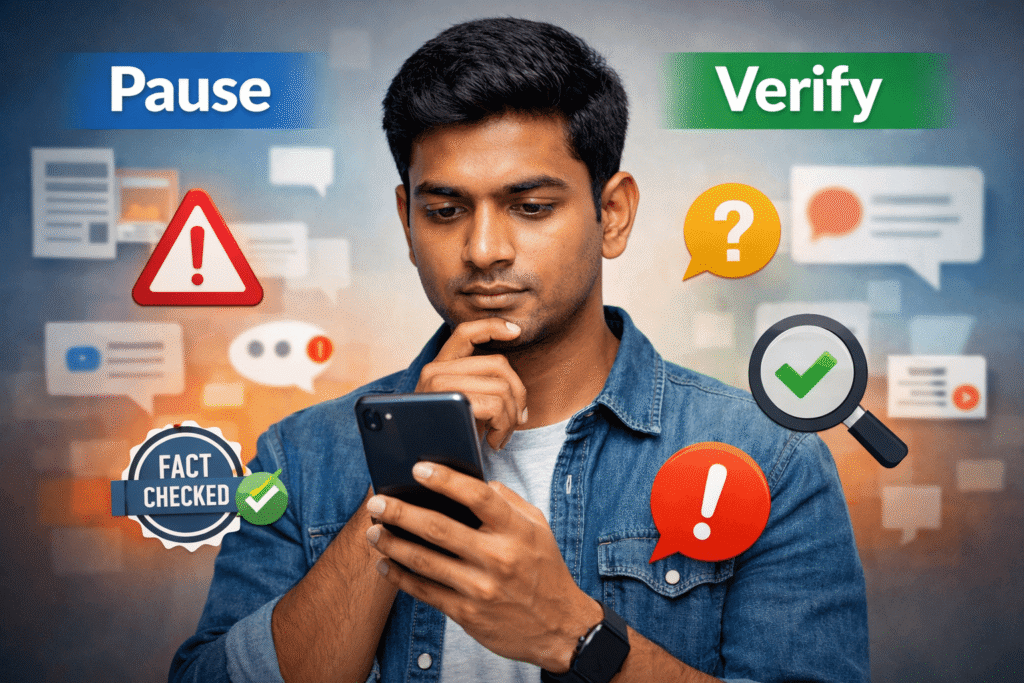
Not everything trending is true.
Not everything loud is right.
Not everything repeated is correct.
Youth today are exposed to more information than any generation before. With that exposure comes responsibility.
Pausing before believing is not weakness.
Questioning is not rebellion.
Thinking independently is not disrespect.
In an age of misinformation on social media, it is a responsibility.
The Way Forward: Awareness With Kindness
The solution is not anger. The solution is not shaming people for believing wrong things.
The solution is:
- Awareness
- Education
- Calm conversation
- Responsible thinking
We don’t need more fights online. We need more thinking offline.

Conclusion: The World Needs Thinkers, Not Followers
Every human being deserves to see the world through their own lens.
Borrowed thinking weakens identity.
Independent thinking strengthens society.
Social media is powerful. Information is powerful. But the most powerful thing remains the human mind — when it chooses to think independently.
In times of confusion, trends, and noise, thinking independently is not optional anymore.
It is necessary.